

Additional info:
Lucreția Mihail Silion received her artistic education under Ipolit Strâmbu, a representative figure of the academic realist tradition that shaped much of early twentieth-century Romanian painting. Related by family to Ion Theodorescu-Sion, she gravitated towards an artistic milieu preoccupied with national identity and the reinterpretation of local subjects through a modern visual language. Although few details of her career are documented, her practice can be situated within the broader context of Romanian women’s painting between the wars, when artists such as Cecilia Cuțescu-Storck, Olga Greceanu and Nina Arbore sought to consolidate the public visibility of women in the fine arts. Within this environment, feminine authorship was often expressed through compositions balancing observation and intimacy, privileging interiority, everyday motifs and a refined chromatic sensibility. Silion’s contribution, though fragmentarily recorded, reflects the gradual integration of women into professional artistic circles and the subtle transformation of pictorial conventions traditionally associated with male painters. Her name remains significant to the study of interwar Romanian modernity as part of a discreet yet essential lineage of female artists who defined a restrained and introspective version of modern painting.
-
Marcel Iancu
Bucharest, Romania, 1895 - Ein Hod, Israel, 1984
You might also like:
-
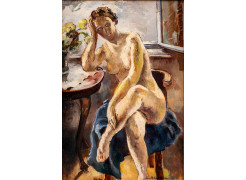 Lucreția Mihail SilionSold for €732
Past Artworks:
-
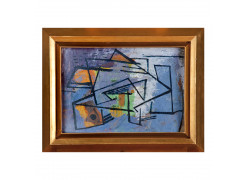 Composition, c. 1926*